DRAFT INSTITUTIONAL FRAMEWORK. The Supreme Court Establishment Proclamation is a consultation draft, not enacted law. This educational model does not exercise binding state authority.

Supreme Court and the Judiciary

The judiciary is the independent branch of government entrusted with interpreting and applying the law, resolving disputes fairly, protecting constitutional rights, reviewing the legality of government action, and ensuring that every person and public authority remains subject to the law. At its head, the Supreme Court serves as the final judicial authority and court of last resort. Its independence depends not only on the impartiality of its Justices, but also on secure tenure, fair procedures, adequate resources, professional administration, accessible courts, reliable records, and public confidence.

The Supreme Court Establishment Proclamation is presently a draft institutional framework. It proposes a Court with defined constitutional, appellate, and presidential-impeachment jurisdiction; five permanent Justices; a professional Registry; financially independent administration; secure electronic case management; public access to judgments; and strong protections for judicial independence. Until the Court is lawfully constituted, THE ABC Journey remains an educational and preparatory project. Its model proceedings, systems, judgments, and institutional work are non-binding but are intended to demonstrate how an independent constitutional judiciary could function.

Role of the Supreme Court

Under the draft Proclamation, the Supreme Court would be Eritrea's final judicial authority and court of last resort, a superior court of record, and an institution that continues despite changes in membership. It would remain independent from the direction or control of any person or authority and would exercise judicial power in the name of the people.

  • Interpret the Constitution authoritatively and review the constitutionality of legislation and governmental action.
  • Hear appeals only where legislation provides an appeal as of right or the Court grants leave.
  • Adjudicate qualifying presidential-impeachment charges transmitted by the National Assembly.
  • Publish reasoned judgments and preserve its records, precedents, pending proceedings, and institutional obligations.
  • Determine its internal organization and operation within the Constitution and legislation.

Jurisdictional limit: Court Rules, administrative practice, CAAM, and website functionality cannot create substantive jurisdiction or enlarge the authority conferred by the Constitution and legislation.

Defined Jurisdiction and Judicial Process

Constitutional Jurisdiction

The proposed Court would have exclusive authority to interpret the Constitution authoritatively and to decide whether legislation or governmental action is constitutional. Lower courts may apply clear constitutional provisions and protect rights within their lawful jurisdiction, while a substantial disputed question requiring authoritative interpretation may be referred to the Supreme Court. Exceptional direct access would remain exceptional and subject to legal requirements.

File or manage a constitutional proceeding through CAAM Public constitutional dockets and judgments Lower-court referral workflow — Planned Exceptional direct-access application — Planned Constitutional remedies and compliance reports — Planned

Appellate Jurisdiction

The proposed Court would hear appeals from lower courts only where legislation expressly permits an appeal as of right or where leave to appeal is granted. Leave may be appropriate for a substantial constitutional question, an important question of law, the interests of justice, or another lawful ground. Not every lower-court judgment automatically reaches the Supreme Court, and an appeal ordinarily proceeds on the lower-court record.

CAAM case access and filing Track public appeals, hearings, and judgments Application for leave to appeal — Planned Appellate record and proposed questions of law — Planned Correction, clarification, and exceptional reconsideration — Planned

Presidential-Impeachment Jurisdiction

This proposed jurisdiction is a special constitutional adjudication of a qualifying charge transmitted by the National Assembly. It is not an ordinary appeal or a criminal prosecution, and it cannot impose criminal punishment. The process must protect democratic accountability and the President's right to a fair hearing.

The secure infrastructure would preserve the authenticated Assembly resolution, the precise constitutional charge, supporting material and Assembly record, independent presenting counsel, presidential notice and response, protected disclosure, witnesses and evidence, public and restricted hearing segments, audiovisual records, separate findings on each charge, and publication and transmission of the final judgment.

Inactive safeguard: No real impeachment proceeding is activated or simulated here. Any future educational demonstration must be expressly authorized and prominently marked as non-binding test or model activity.

Authenticated Assembly transmission — Not Started Protected disclosure and evidence workspace — Not Started Public and restricted hearing record — Not Started

Composition, Appointment, and Independence

The completed Court proposed by the draft consists of five permanent Justices: the Chief Justice and four other permanent Justices. The Court is initially constituted only when the Chief Justice and at least two other permanent Justices have lawfully taken the judicial oath. Remaining vacancies would then be filled within the proposed transitional period. No person is shown as constitutionally appointed.

Five permanent offices — public composition tracker
OfficeRequired processStatus
Chief JusticePresidential selection → published biography, qualifications, and reasons → public National Assembly approval process and recorded vote → presidential appointment → judicial oathVacant
JusticeOpen JSC process → JSC proposal → public National Assembly approval → presidential appointment → judicial oathVacant

Appointment Responsibilities

Chief Justice: The President selects the candidate and publishes the candidate's biography, qualifications, and reasons for selection. The National Assembly conducts a fair public approval process and recorded vote. Following approval, the President appoints the Chief Justice, who must take the judicial oath before exercising authority. Under the draft, the Judicial Service Commission does not select or propose the Chief Justice; it may supply generally applicable qualification or integrity information only when lawfully requested.

Other permanent and Reserve Justices: An open, competitive, merit-based Judicial Service Commission process leads to a JSC proposal, public National Assembly approval, presidential appointment, and the judicial oath.

Reserve Justices

The draft provides for a roster of up to three Reserve Justices to prevent paralysis caused by recusal, illness, vacancy, or emergency. Reserve Justices must meet the same qualifications and pass through the required JSC, Assembly, presidential-appointment, and oath stages. Assignment must be neutral and by rotation, never based on an expected view of a case.

Qualifications, Incompatibilities, and Equal Opportunity

A permanent or Reserve Justice would need Eritrean citizenship, a recognized legal qualification, at least fifteen years of relevant legal experience, exceptional legal ability, constitutional understanding, independence, integrity, impartiality, and sound judgment. Active political office, service in defence, police, security, or intelligence institutions, incompatible employment, legal practice, commercial management, unmanaged conflicts, and serious professional misconduct are incompatible with active judicial service.

Diversity means broad and equal access to a merit-based process, including meaningful participation by women and Eritrea's regional, cultural, linguistic, and social communities. Diversity does not replace the required qualifications.

Judicial Work and Decision-Making

  • The full Court ordinarily hears constitutional matters, impeachment proceedings, proposed departures from precedent, disputes between principal state organs, and other exceptionally important matters.
  • Ordinary appeals are heard by an uneven panel of at least three Justices.
  • The ordinary full-Court quorum is four. An urgent constitutional matter may exceptionally proceed with three where the legal requirements are met.
  • A constitutional declaration requires at least three affirmative votes. A finding that an impeachment charge is proved requires at least four affirmative votes.
  • Every Justice has one vote; the Chief Justice has no casting vote. Concurring and dissenting opinions may be published.
  • A single Justice has only limited authority and cannot finally determine an appeal, constitutional validity, impeachment, or a departure from precedent.
Neutral panel assignment — Secure platform only Recusal disclosures and applications — Secure platform only Reserve Justice rotation and quorum validation — Secure platform only Confidential deliberation, voting, and opinion circulation — Restricted judicial access Judgment authentication and publication — Registrar-controlled

Decisional confidentiality: Administrators may not view or alter judicial votes or draft opinions without express lawful authorization. Case-assignment and quorum controls must never be used to manufacture a preferred majority.

Chief Justice

The Chief Justice presides over the Court and provides judicial and institutional leadership, including full-Court sittings, fair case-assignment safeguards, judicial conferences, administrative meetings, supervision of the Registrar in administrative matters, and lawful institutional relations. The Chief Justice cannot direct another Justice's vote, reasoning, or opinion. Administrative decisions must be transparent and collectively reviewable by the permanent Justices where the draft requires.

Official statements and correspondence — Planned Judicial conferences and public legal education — Planned Administrative reports and annual priorities — Planned Court Rules and consultation materials Practice announcements and directions

Registry and Judicial Administration

The Court would appoint the Registrar through open competition. The Registrar is the principal administrative officer, a qualified lawyer with the prescribed experience, and acts under the lawful institutional direction of the Court rather than the executive.

The Registrar receives, verifies, registers, and safeguards filings; maintains the docket and official files; administers neutral assignment; issues notices; certifies records; supports hearings; publishes judgments; manages staff; serves as accounting officer for procurement and finance; protects systems and archives; and prepares budgets, statistics, and administrative reports.

Direct Supreme Court Administration

Docket, filings, Court staff, hearings, records, finances, procurement, technology, archives, and publication.

Shared Technical Services

Registry or technology services may be shared with lower courts only through lawful arrangements that preserve each court's authority and records.

Authorized Judiciary-Wide Coordination

Coordination is limited to functions affirmatively authorized by legislation and cannot create control over lower courts.

Separate Legislation Required

Lower-court governance, jurisdiction, administration, staffing, and appellate transfer require their own lawful foundation.

Secure Judicial Administration Portal

The planned portal is for the Registrar, Deputy Registrar, authorized Registry staff, finance and records officers, translators, information-technology staff, legal researchers, law clerks, and other specifically authorized personnel. It must use least-privilege access and immutable audit logs for docket administration, neutral assignment, authorized positions, budgets, expenditure, procurement, assets, facilities, security, technology incidents, language services, education schedules, policies, practice directions, retention, statistics, reports, continuity, notifications, and document generation.

Security boundary: WordPress is the public content-management system, not the authenticated judicial-administration dashboard. No external portal link is published because a security-reviewed external judicial platform URL has not been configured. Personnel, budget, facility, procurement, or technology access must not automatically disclose confidential case material.

Secure Judicial Administration Portal — Unpublished pending independent security review

Budget and Financial Independence

The draft provides for the Court to prepare its own annual budget and submit it directly to the National Assembly, with a copy to the ministry responsible for finance. The executive may comment but should not revise the Court's estimates before presentation. Separate categories should cover adjudication, Registry operations, translation, legal research, technology, security, publication, and records maintenance.

Budget preparation, internal approval, and Assembly submission — Planned Appropriation, expenditure, procurement, and asset registers — Planned Auditor General review and audited statements — Planned

CAAM, Open Justice, and Equal Access

Case Access and Management

Case Access and Management (CAAM) may become the Court's official electronic platform for filing, service, docketing, scheduling, records, and publication. It must preserve original files, authenticity, version history, permissions, timestamps, auditable changes, Registrar certification, backups, disaster recovery, and non-digital continuity.

Electronic filing cannot be the only access channel. The Registry must also support physical filing, regional or shared facilities, disability accommodations, language assistance, and other reliable channels. Technology failure must not extinguish a right or invalidate an otherwise authentic and timely filing.

Open Justice and Public Records

Public access should include dockets, judgments, orders, calendars, public filings, recordings, Court Rules, practice directions, administrative reports, statistics, audited financial statements, consultation materials, and historical records. Public hearings may be livestreamed and recorded through THE ABC Project's shared YouTube channel when an official URL is configured. No unverified channel link is published.

Restrictions must be reasoned, narrowly tailored, and limited to legitimate grounds such as protection of children or vulnerable persons, lawful privilege, personal safety, properly defined national security, confidential commercial information, or the proper administration of justice. Masking and redaction controls must operate at document, hearing-segment, or case-record level under lawful authority.

CAAM Public Access Court Rules Practice Directions Court statistics and administrative reports — Planned Audited financial statements and historical archive — Planned

Languages and Accessibility

Every party should be able to use an Eritrean language and receive interpretation necessary for meaningful participation. Systems must record language needs, interpreter requests and assignments, translated filings, whether a translation is authoritative or informational, translated judgments or summaries, accessibility accommodations, and regional or non-digital access. No person should suffer procedural disadvantage because of language, disability, lack of internet access, or remote residence.

Cybersecurity, Data Protection, and Artificial Intelligence

Judicial systems require identity verification, encryption, role-based access, incident response, tested backups, vendor-risk controls, immutable audit logs, retention rules, secure destruction, breach investigation, protected notification, and disaster recovery. No foreign or private provider should control judicial records, suspend Court access, or reuse judicial information for an unrelated purpose.

Artificial intelligence may assist research, translation, transcription, scheduling, accessibility, citation checking, and document management. It must not decide assignment, credibility, guilt, constitutional validity, or judicial outcomes. Justices remain personally responsible for judgments, material use affecting procedural rights requires human review, and confidential information must not enter an unapproved AI system.

Court Rules, Statistics, Reporting, and Institutional Relationships

Court Rules, Regulations, and Practice Directions

Draft, interim, historical, and final rules should display status, authority, publication and effective dates, amendment history, and public-comment records. Rules may regulate procedure but cannot create substantive jurisdiction, change the number or tenure of Justices, alter appointment or removal, define another institution's powers, or unreasonably restrict constitutional access.

Judicial Statistics and Annual Reporting

Carefully contextualized statistics should cover filings, pending cases, dispositions, time to judgment, appeals, constitutional referrals, direct-access applications, language and access services, staffing, technology, expenditure, and implementation priorities. Statistics support transparency and improvement, not pressure for particular outcomes or disclosure of deliberations.

A future annual-report generator should produce an accessible web report and court-standard PDF. The Chief Justice and Registrar may answer questions about administration and expenditure, but not pending cases, judicial votes, or judicial reasoning.

Accessible annual report and court-standard PDF generator — Planned

Institutional Relationships

The Court's lawful relationships with the Judicial Service Commission, National Assembly, President, Advocate General, Auditor General, lower courts, court users, and the public require cooperation without external direction of case assignment, hearings, deliberation, judgments, remedies, or Court administration.

Phased Establishment Tracker

This public tracker is based on Schedule 2 of the consultation draft. Every item begins at Not Started; no progress, appointment, authority, or completion is fabricated. Target periods begin only after lawful commencement. Completion dates remain blank until supported by an authenticated public record.

Draft implementation roadmap — baseline public record
TargetImplementation itemResponsible institutionStatusCompletion / supporting record / audit note
First 30 daysBegin the constitutionally appropriate processes for all five permanent offices.President, National Assembly, and JSC according to the officeNot Started— / Draft Schedule 2 / Initial roadmap; no completion claimed.
First 30 daysEstablish secure appointment and public-information procedures.President, National Assembly, and JSC within their powersNot Started— / Draft Schedule 2 / Public procedures required.
First 30 daysIdentify premises, Registry capacity, and protected-record infrastructure.Responsible transitional authorities; Court when constitutedNot Started— / Draft Schedule 2 / Security review required.
First 30 daysPrepare the initial judicial budget.Court or lawfully authorized transitional officeNot Started— / Draft Schedule 2 / No estimates published.
First 30 daysPreserve appellate records that may lawfully transfer.Existing lawful courts and future RegistryNot Started— / Draft Schedule 2 / Transfer depends on jurisdiction and record integrity.
First 100 daysComplete appointments as due process permits and publish judicial oaths.President, National Assembly, JSC, and authorized oath administratorNot Started— / Draft Schedule 2 / No appointee shown.
First 100 daysAppoint an interim Registrar transparently.Lawfully constituted CourtNot Started— / Draft Schedule 2 / Open process required.
First 100 daysAdopt interim Court Rules, recusal rules, and neutral assignment protocol.Permanent JusticesNot Started— / Draft Schedule 2 / Model materials have no legal force.
First 100 daysEstablish physical and electronic filing.Court and RegistrarNot Started— / Draft Schedule 2 / Non-digital access required.
First 100 daysAdopt cybersecurity, confidentiality, and records-continuity controls.Court and RegistrarNot Started— / Draft Schedule 2 / Independent security testing required.
First 100 daysPublish language and accessibility plans.Court and RegistrarNot Started— / Draft Schedule 2 / Equal participation required.
First 100 daysExplain the non-binding status of earlier model proceedings.Lawfully constituted CourtNot Started— / Draft Schedule 2 / This page already labels current model work non-binding.
First yearFill all five permanent offices and establish the Reserve Justice roster.President, National Assembly, and JSC according to the officeNot Started— / Draft Schedule 2 / No officeholder invented.
First yearAppoint the permanent Registrar and essential professional staff.CourtNot Started— / Draft Schedule 2 / Competitive recruitment required.
First yearAdopt final Court Rules after public consultation and special impeachment rules.Permanent JusticesNot Started— / Draft Schedule 2 / Consultation record required.
First yearEstablish a judicial library and law-clerk program.Court and RegistrarNot Started— / Draft Schedule 2 / Conflict and confidentiality controls required.
First yearImplement secure CAAM infrastructure.Court and RegistrarNot Started— / Draft Schedule 2 / Current CAAM is an educational model.
First yearAdopt judgment, citation, translation, media, and AI policies.CourtNot Started— / Draft Schedule 2 / Policies not yet adopted.
First yearEstablish baseline statistics.Registrar under Court authorityNot Started— / Draft Schedule 2 / No performance inference permitted.
First yearPublish the first administrative and budget report.Chief Justice and Registrar within their functionsNot Started— / Draft Schedule 2 / No report yet exists.
First 3 yearsEvaluate access, case selection, panel operations, delay, and compliance.Court and RegistrarNot Started— / Draft Schedule 2 / Evidence-based review required.
First 3 yearsStrengthen regional filing, interpretation, and legal-aid connections.Court with legally authorized partnersNot Started— / Draft Schedule 2 / Regional access plan required.
First 3 yearsTest disaster recovery and archive integrity annually.Registrar and authorized security personnelNot Started— / Draft Schedule 2 / Test reports subject to lawful security limits.
First 3 yearsReview Court Rules through public consultation.Permanent JusticesNot Started— / Draft Schedule 2 / Public-comment history required.
First 3 yearsDevelop continuing judicial education.CourtNot Started— / Draft Schedule 2 / Decisional independence must be protected.
First 3 yearsRecommend evidence-based legislative amendments.Court within lawful institutional channelsNot Started— / Draft Schedule 2 / No amendment recommendation made.

Judicial Profiles and History

Status clarification: The educational profiles below do not represent constitutional appointments and create no preference in any future appointment process. The historical profile is separately identified.

Justice Sara Berhe — Educational Model Profile

Justice Sara Berhe earned her LL.B. in 1999 and later served for two years as a regional court judge, concluding that service in 2003. She subsequently pursued postgraduate studies in the United States, where she earned an LL.M. In 2006, she founded a nonprofit organization dedicated to strengthening judicial institutions across Africa. Through that organization, she worked in several West African countries and helped provide professional training to police officers and public prosecutors. Her achievements led to senior advisory assignments involving United Nations and European development agencies engaged in judicial reconstruction and reform. Justice Berhe has published widely on judicial independence in Africa and brings to the Court substantial legal expertise, extensive international experience, and valuable knowledge of judicial administration.

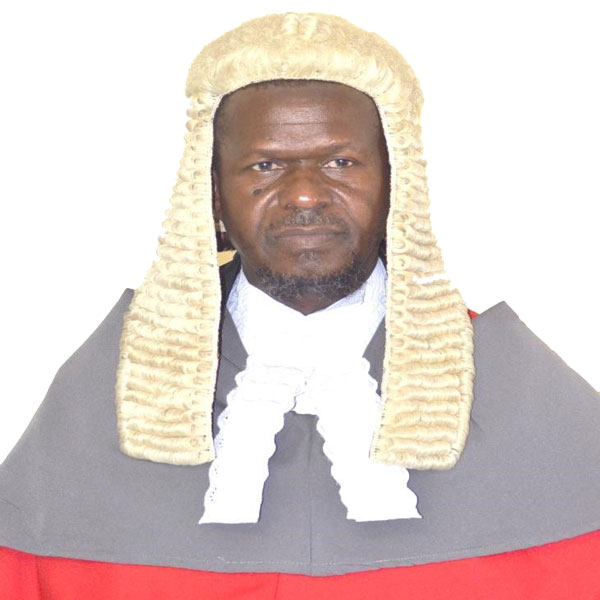
Existing illustrative profile image associated with Justice Sara Berhe

Justice Said Ali — Educational Model Profile

Justice Said Ali began his legal career as a court interpreter in 1983. After earning a diploma in law, he was appointed a state prosecutor at the wereda-court level in 1988 and served in that position until December 1992. He earned his LL.B. in June 1993 and was appointed as a regional court judge the following month, serving on that court until 2001, when he left Eritrea to pursue postgraduate studies in South Africa. He subsequently earned both an LL.M. and an LL.D. Following his doctoral studies, Justice Ali held senior research roles with the Special Court for Sierra Leone and the International Criminal Court, where he supported complex judicial research and analysis. His career spans court interpretation, prosecution, adjudication, academic research, and international criminal justice, giving him experience ranging from Eritrea's local courts to technologically advanced international tribunals.

Existing illustrative profile image associated with Justice Said Ali

Sir James Shearer — Historical Profile

Sir James Shearer served as Chief Justice of the Supreme Court of Eritrea during the 1950s, remaining in office until 1959. A British jurist who served shortly after the end of the British Military Administration, he brought extensive legal training and a degree of institutional independence from Eritrea's executive authorities. During his tenure, Eritreans increasingly turned to the Supreme Court for protection against unlawful and unconstitutional government action. Under his leadership, the Court invalidated legislation it found unconstitutional, ordered the release of unlawfully detained citizens, and affirmed the rights of citizens to assemble and demonstrate. These decisions established the judiciary as an important safeguard for constitutional government and individual liberty. His departure in 1959 marked a significant turning point, after which judicial independence weakened while executive power expanded with fewer effective restraints. This page recognizes Sir James Shearer for his contribution to Eritrea's early constitutional and judicial history. The image displayed is illustrative and is not a portrait of Sir James Shearer; anyone possessing an authenticated photograph or portrait is invited to contact The ABC Journey at theabcjourney@gmail.com.
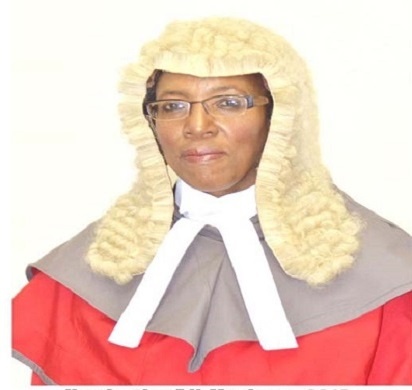
Illustrative historical image; not an authenticated portrait of Sir James Shearer